Zum Inhalt springen
Dungeons & Dragons 5e

Dungeons & Dragons 5e

4–6 Spieler 2014

Über dieses Spiel

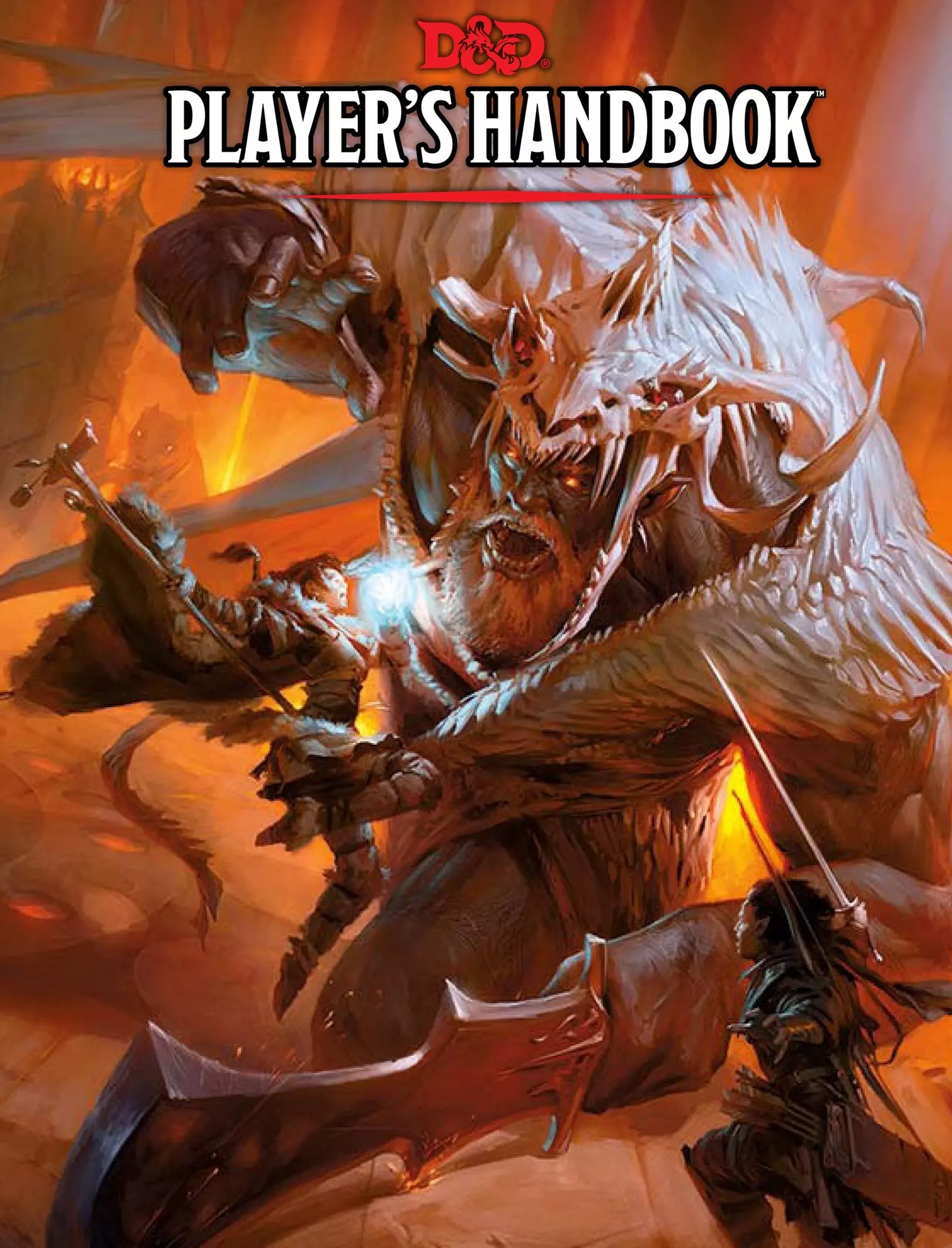
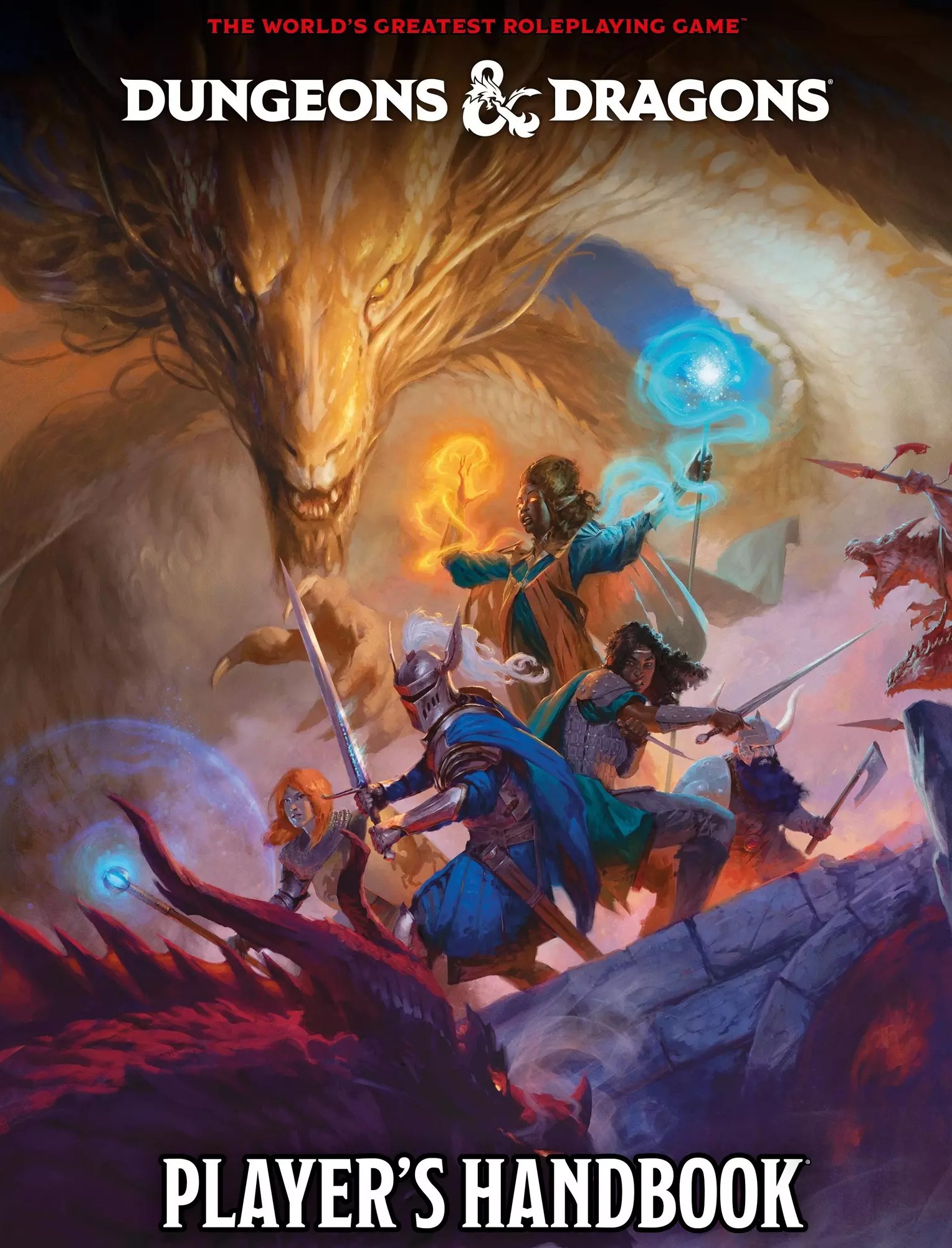
Dungeons & Dragons 5e is the world's most popular tabletop roleplaying game! With a legacy spanning 50 years, to the dawn of the fantasy RPG hobby, dozens of high-profile actual play shows, and a name synonymous with playful nerd-dom in pop culture, D&D's fifth edition has hit the mainstream. This latest edition builds on the legacy of its predecessors with streamlined rules, lavish art, a wealth of character and setting options, and a massive community of player-driven customization, third-party publishers, and homebrewed rules. In D&D, you and a table of friends take on the roles of fantasy heroes to fight monsters, seek treasure, grow in power, and hopefully save the world! One player, the Dungeon Master, or DM, acts as the rest of the world, including environments, non-player characters, monsters, and villains. The DM describes a situation, players say what they do, maybe they roll some dice, and the DM tells them how the world responds. As they adventure, characters grow, leveling up as they gain experience and becoming more and more powerful. They'll go from hometown heroes to nigh on demigods, shaping the destiny of the world as they know it. Whether it's epic fantasy like Lord of the Rings, sword-and-sorcery like Conan, or heroic high fantasy like The Legend of Zelda or Final Fantasy, Dungeons & Dragons can make it happen. The game's "three pillars" of combat, exploration, and roleplay allow you and your table to calibrate your experience. Play in a setting you love, whether it’s the Forgotten Realms, Critical Role’s Wildemount/Exandria, your own steampunk-themed world where wizards ride dinosaurs, or anything in between—your imagination truly is the limit!

Kategorien

Fantasy High Fantasy

Mechaniken

d20 System

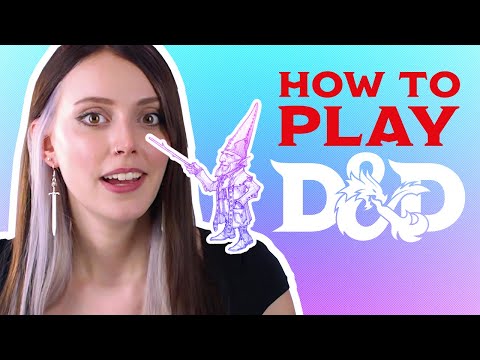
How to Play Dungeons & Dragons 5e

If you're just getting into the tabletop RPG hobby and want to know how D&D works, this video can introduce you to the basics of the game. Essentially, you and a group of three to five friends all sit down at a table to play a game of fantasy adventure where you are the heroes. One player, the Dungeon Master, or DM, will describe your situation, the rest of the players decide what to do, and the DM, who also plays the environment, the non-player characters, the monsters, and the world, says how the situation responds.

Occasionally, when your characters attempt something difficult or dangerous, you'll need to roll dice to determine whether they succeed or fail. Typically, you'll roll a twenty-sided die, add any bonuses from relevant stats or skills, and compare the number to a difficulty, a target number set by the DM. If you meet or exceed that number, you succeed! This is also how attacking works in combat, except the target number is your target's "armor class," or how difficult they are to hit. It's also how you'll make "saving throws," reactive rolls made to avoid sudden danger.

Some characters can cast magic spells, each of which has its own rules, but might involve attack rolls or saving throws to see if their most powerful effects take place. The game also has some rules for exploration, like tracking light in dark places, resources in the wilderness, and how far you can travel in a day. There's also some rules for social play, negotiating with non-player characters. Generally, the focus of Dungeons & Dragons is right in the name: going into dangerous places and fighting monsters! If you're lucky and skilled, you'll come out with treasure, some new abilities, and an unforgettable story to tell.

Classes
Artificer

Artificer

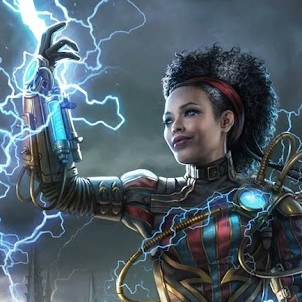
Why wait for magic items when you can build your own? The Artificer makes use of tools and science to make magic. This gives you a grab bag of abilities from healing to damage dealing to quickly making a necessary tool. Artificers can enchant normal items to take on magical properties, outfitting their team with powered-up gear or giving themselves a fantasy Iron Man suit.
Barbarian

Barbarian

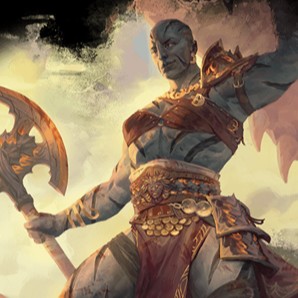
This one’s for those who love to play the undying tank in video games. Barbarians use their rage to perform great feats of strength and halve incoming damage. You can also channel the protection of the world tree, bond with animals, or just kick butt like Grog from Vox Machina. It’s a simple but rewarding playstyle, one that’s perfect for new players who don’t want to get into the complexities of magic.
Bard

Bard

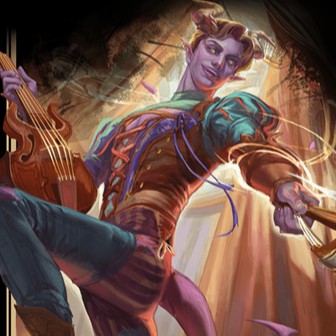
Your inner theatre kid probably brought you to the Bard. This class uses a variety of performance styles to cast spells and inspire other characters. Let your imagination run wild as you unleash your power through dance, song, spirit calling, or sword dancing, to name a few. You’ll be charming enough to talk your way out of a fight, but tricky enough to hinder opponents once the fists start flying.
Cleric

Cleric

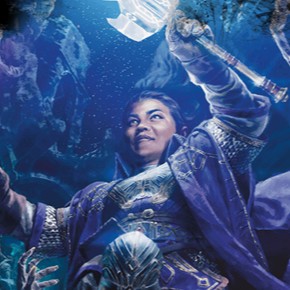
MMO players might see Cleric and think dedicated healer, but that’s not the case. While a Cleric can harness powerful healing magic, their full suite of abilities depend on their god. As such, they can wield damaging radiance, craft illusions bestowed by trickster gods, or become the hammer of a war deity. Clerics end up with a nice balance of damage, utility, and sturdiness.
Druid

Druid

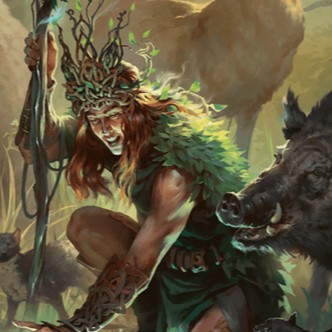
When you gotta have an animal companion (or twenty) in every game, Druid is for you. Druids draw upon nature’s fury to heal allies, bind enemies, and transform into animals themselves. You can also summon a pet or many deadly pets at higher levels. Become a feral freedom fighter by playing a Druid.
Fighter

Fighter

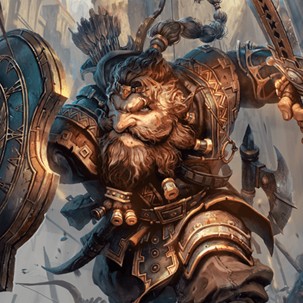
If your power fantasy is being the big guy with a big sword, look no further than Fighter. This classic DnD class gives you all the weapons and straightforward rules for using them. Just hit the bad guys a lot. If you want to get tactical, some Fighters can use fancy maneuvers or magic. Whether you want to be swift like Legolas, strong like Guts from Berserk, or versatile like Link from Legend of Zelda, Fighter’s got you covered.
Monk

Monk

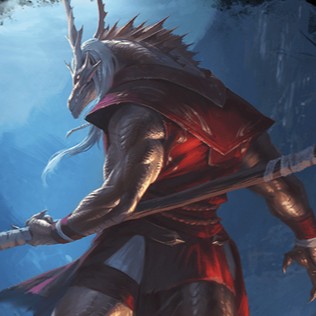
The martial arts fantasy is alive and well in the Monk. While Fighters often rely on heavy armor and lots of weapons, the Monk is meant to move swiftly and strike with many blows. DnD Monks wield an inner power that’s not quite magic but still lets you perform all sorts of gravity-defying maneuvers. As more abilities unlock, you can become a shadowy assassin, heal with your hands, or wield all four elements like the Avatar.
Paladin

Paladin

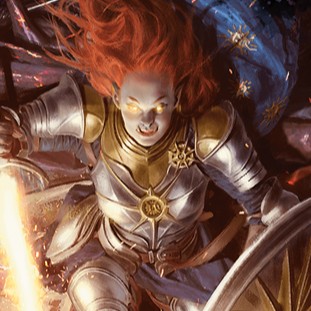
The image of a knight in shining armor is iconic to medieval fantasy, and the Paladin delivers with magical flair. They wear armor like the Fighter and can heal like the Cleric, but pack an extra punch with their signature smite. This attack lights your weapon up with divine power and lets you roll extra dice which always feels nice. You can design your Paladin as a holy warrior of justice, guardian of nature, or tortured warrior of vengeance.
Ranger

Ranger

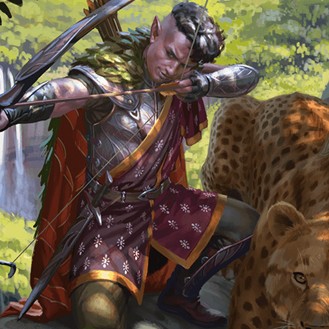
Become a lone warrior of the wilds, a wandering blade that protects the fringes of society from evil. The Ranger commands nature magic with pure survival skill to guide the party on long journeys. In battle, they wield weapons with precision to hunt down targets. With level ups, you can boost your Ranger’s abilities with fey powers, shadow magic, or give them a beast companion.
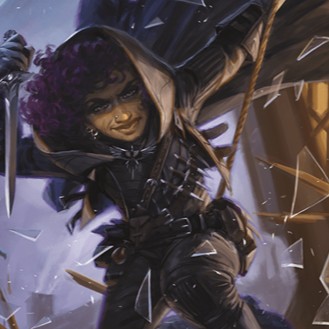
Rogue

Rogue

A good stealth character can tear enemies apart from the shadows or discover secrets that stop the battle before it even begins. The Rogue is where you go to get that fantasy. You can choose from a variety of skills to customize your Rogue, such as poisoning your blades to become an assassin, learning magic for illusions, or just being a crafty thief.
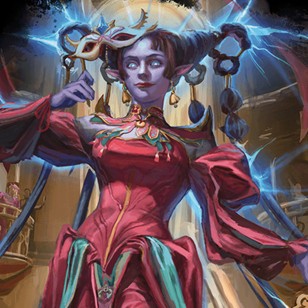
Sorcerer

Sorcerer

The Sorcerer class leans into the glass cannon build popular in video games. Their health is on the lower side and they don’t wear armor, but they cast some of the most powerful spells in the game. Sorcerers also have magical mutations that let you empower your spells beyond those of other spellcasters. You also get to choose the source of your magic, be it eldritch mystery, pure chaos, or the blood of dragons.
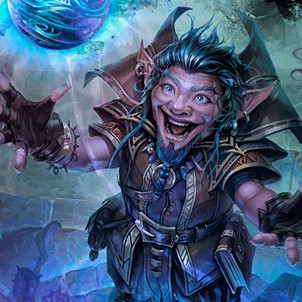
Warlock

Warlock

If you like your magic creepy and mysterious, check out the Warlock. These characters get magic from a patron, which can range from a demonic pact to an unknowable elder god. This unique approach to magic grants warlocks a few spells that they specialize greatly in. When a Warlock takes their turn in combat, everyone notices. Warlocks are also fantastic for roleplay as they have a built-in storyline with their patron.
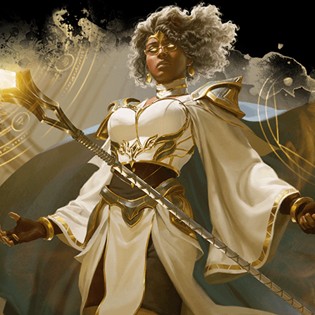
Wizard

Wizard

The original spellcaster, and the one who gets all the spells. Wizards don’t get divine help or a mysterious patron, so they have to learn magic the old-fashioned way: by reading. This allows Wizards to gain more spells than any other class as long as they can find books. Wizards can come to the rescue in almost any situation, as their magic can save allies, fool enemies, boost physical abilities, learn secrets, and blow things up.

Häufig gestellte Fragen

What does TPK mean in D&D?
TPK stands for “Total Party Kill,” a situation in which the entire party, or every player character, dies during a game session. While it’s frequently seen as the end of a campaign, it doesn’t have to be! Game Masters have been known to allow new adventurers to take up the cause of the fallen, or even give dead heroes a chance to cheat death.
What does Proficiency mean in D&D?
Proficiency refers to a few related things in Dungeons & Dragons. First, it can refer to things your character is trained to use; your character might have “proficiency” with certain weapons, types of armor, tools, and languages, meaning they can skillfully apply those things for their respective uses. It also refers to the skills your character specializes in. A wizard might have proficiency in Arcana, for example, to represent years of study; a fighter in Intimidation if they’re big and scary; and a rogue in Stealth if they’re skilled at sneaking around. Finally, it refers to your “proficiency bonus,” which is a flat number you add to your d20 rolls when you’re making a check you’re proficient in. For example, that sneaky rogue adds their proficiency bonus when they roll to hide from guards because they’re proficient in Stealth; to roll to pick a lock because they’re proficient with thieves’ tools; and to stab their target in the back because they’re proficient with daggers. A character’s proficiency bonus increases as they level up.
What is Min Maxing in D&D?
“Min-maxing” is a term that refers to mechanically optimizing a tabletop RPG character to specialize in doing one specific thing, to the detriment of their other skills and abilities. It comes from systems where you could maximize a value in one attribute by minimizing the rest. Hyper-specializing in this way is often frowned upon when one character outshines the rest, but players can absolutely min-max productively and cooperatively with others. In fact, some players play RPGs for the purpose of crafting powerful builds that accomplish some goal to great effect. After all, a team of specialists whose strengths and weaknesses all complement each other’s can be extremely fun to play!
What is a critical hit in D&D?
A critical hit occurs when a player rolls a “natural 20,” or a 20 on the die, on an attack roll in Dungeons & Dragons. Representing an especially accurate or devastating blow, a character scoring a critical hit doubles the dice they roll for damage. If a rogue would roll 1d6 weapon damage plus 3d6 sneak attack damage, for example, they’ll roll 2d6 for the weapon and 6d6 sneak attack damage on a critical hit.
What is Alignment in D&D?
The Alignment system, though it’s changed over the years, is as old as Dungeons & Dragons itself! It’s a system for categorizing a character or monster’s attitude toward both morality and law. On the morality axis, a creature can be good, neutral, or evil, depending on whether it views helping or hurting others as virtuous. On the law axis, a creature can be lawful, neutral, or chaotic, depending whether it believes civilization to be virtuous or not. The combination of these axes gives nine possible alignments, which you may be familiar with from the proliferation of “alignment charts” on the internet as a popular way to discuss characters from across or within pieces of media. Some players believe alignment is something a character should choose and adhere to, while others use it to describe a character’s position based on their actions. Many players don’t use it at all, as some find it a restrictive or inflexible way to define a character’s philosophy.
What is a D&D one shot?
A one-shot is a self-contained, single-session game of Dungeons & Dragons (or any roleplaying game). While D&D is commonly considered a “campaign game,” that is, a longer running series of sessions that may last weeks, months, or years, it’s very popular to play just a single session focusing on a specific scenario or element of the world. Some players use one-shots to do wacky or experimental things with characters and settings, as they tend to be lower-commitment and lower-stakes, offering the opportunity to let your creativity run wild.
What is the maximum level you can have in a class in D&D 5e?
Classes in Dungeons & Dragons go up to 20th level.
When did D&D come out?
The original Dungeons & Dragons was first released in 1974, and it’s come a long way since then! The most recent edition, 5E, came out in 2014 and was updated in 2024.
How do you play D&D online?
Playing Dungeons & Dragons online has never been easier! All you need is a platform for voice and/or video chat and you can play just as if you were sitting around a table. Some players like to add a virtual tabletop like Roll20 or Foundry to the experience to have a visual aid for maps, tokens, and handouts. They may even have digital dice rollers, character sheets, and music! Of course, one player will need to take on the role of the Dungeon Master. If you don’t already have a group to play with, you can often find one in “Looking For Group” or LFG forums, fan communities for the game, or services like StartPlaying.Games dedicated to helping players find the right group for them.
How many people do you need to play D&D? / How many people can play D&D?
Dungeons & Dragons can be played with as few as two players: one Dungeon Master, and one player character. Typically, a D&D party consists of one Dungeon Master and 3–5 players, though groups can and do get much bigger than that! The system starts to strain around 7 players, and a big group certainly isn’t recommended for beginners, but some tables swear by it anyway!
Who created D&D?
Dungeons & Dragons was first created by Gary Gygax and Dave Arneson. Gygax created the game after he attended one of Arneson’s sessions of a game called Blackmoor, based on Gygax’s rules for a wargame called Chainmail. It’s had several iterations and editions since then, but since 1997, the designer and publisher of D&D has been Wizards of the Coast.
What dice do you need for D&D?
The traditional Dungeons & Dragons dice set contains seven dice: a 20-sided die, or d20, as well as a d12, d10, d8, d6, d4, and a second d10 sometimes called a d100, which goes from 00 to 90 and is used for rolling “percentiles” from 1–100 when combined with a normal d10. A single set of dice is usually sufficient, but many D&D players quickly find themselves collecting as many as they can get their hands on!
How many D&D books are there?
There are three core Dungeons & Dragons books, namely the Player’s Handbook, the Dungeon Master’s Guide, and the Monster Manual. A typical player usually only needs the first, but a prospective Dungeon Master will usually want all three. In addition, Wizards of the Coast has released dozens of supplemental books containing additional optional rules, player options, and adventures, and third-party publishers have produced hundreds more.
What do you need to play D&D?
To play Dungeons & Dragons, you’ll need a character sheet, dice, and a group of friends! All of these can be physically or virtually present, and at least one of you should understand the basic rules. Usually, that’s the Dungeon Master, the player who prepares the scenario, presents it to the players, and facilitates the game. This player can help the rest learn as they play, creating characters and letting the fantastical adventure unfold!
How long does it take to play D&D?
A single typical session of Dungeons & Dragons lasts around 3–4 hours, though different tables may play for shorter or longer amounts of time. That said, many games last far more than a single session, meeting regularly (or irregularly) for weeks, months, years, or even decades. A single-session game or “one-shot” isn’t uncommon by any means, however, and a dedicated group of players could absolutely complete a small D&D campaign in 6–12 sessions.
What is homebrew in D&D?
“Homebrew” is a term from the hobby culture of D&D and tabletop RPGs that means “not officially published.” Anything that a Game Master and their players make up, or even anything official that they modify, is considered “homebrew.” It’s believed to be the most common way to play RPGs, as virtually every table creates custom content and house rules to suit their needs.

Spiel besorgen

Aktive Sitzungen & Kampagnen

Aktuell gibt es 1 Spielsitzungen und 1 Kampagnen mit diesem System.

Du bist offline — einige Funktionen sind möglicherweise nicht verfügbar
Wieder online