
Cypher System
2–6 players
2019
About this Game
Cypher System is a groundbreaking tabletop game engine that allows for incredible flexibility to play any type of campaign, in any genre. One can play in the system’s flagship setting “Numenera” or in the worlds of popular podcasts such as “The Magnus Archives” and “Old Gods of Appalachia”. Additional settings can include Post-apocalyptic, sci fi, fantasy, cyberpunk, horror– if you can name it the Cypher System has it! Regardless of the genre, Cypher System games feature a narrative forward play experience that emphasizes discovery, problem solving, character growth, and meaningful roleplay over defeating monsters and getting XP. Character creation is simple yet elegant, as players make a three-part sentence describing who they are going to play. The rules are simple enough for beginners to learn quickly, and sophisticated and deep enough for veterans to unleash their creativity in surprising new ways.
Categories
Horror
Fantasy
Sci-fi
Modern
Mechanics
d20 System
How to Play Cypher
The core mechanic in Cypher System is rolling a 20-sided die, and comparing the results to a Task Difficulty table. Every task, action, creature and object in the game is assigned a level and players roll to meet or beat the difficulty assigned to what they are trying to do. There are critical successes rolling a 17 or higher and thrilling GM "intrusions" for rolling a 1. Players can improve their odds with skills, abilities, tools, and help from their friends. Characters can even tap into their XP pool to influence the course of the game with player intrusions! Players create a character by picking from a variety of options to form a 3 part sentence that includes a type, descriptor and focus. Each choice in a character sentence helps define the fantastic abilities and potential hindrances in the course of adventure.
Frequently Asked Questions
What Dice do you need for a Cypher System game?
Players typically roll a twenty-sided die, or D20 for most tasks in a Cypher. For healing and determining cypher levels a player will roll a six sided die, or D6. Rarely, a player or GM may find themselves rolling a D100, or two ten-sided dice to determine random events or outcomes.
What if I am not comfortable with certain themes or content in a Cypher System game?
Just like many tabletop roleplaying games, a Cypher System game can cover a vast range of topics and themes, including violence, horror, romance, illness, and more. Any game worth playing will have safety tools and content warnings where players can let their group and/or GM know what topics might they be uncomfortable with. Monte Cook Games, the creator of the Cypher System has a robust "Consent in Gaming" worksheet groups can use to establish appropriate topics and themes for their games.
What books or materials do I need to play the Cypher System?
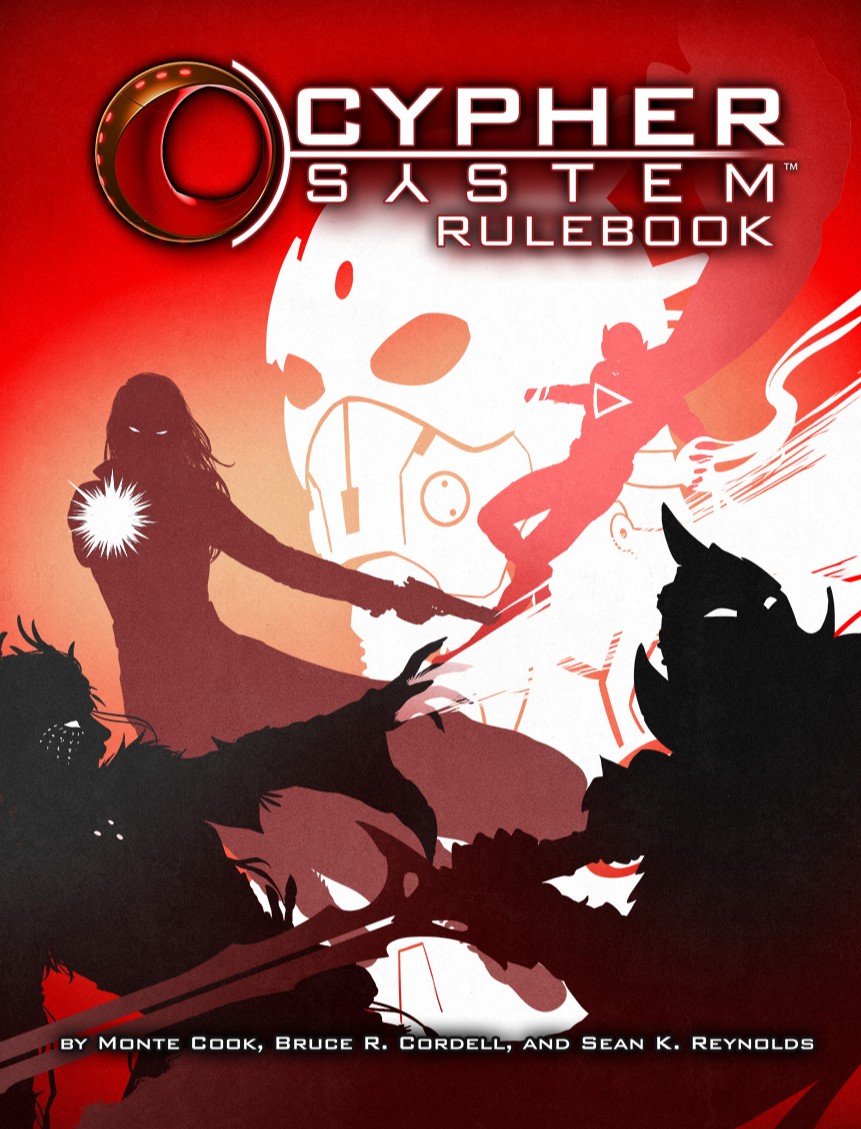
There are a variety of setting guides and player resources available to players, so much it may seem overwhelming! It has never been easier for a player to get into a Cypher System game as nearly all content is available for players via a robust Cypher System Open License (CSOL). The Basic rules which cover nearly everything a player will need is available for free. You may want to pick up the Cypher System Core Rulebook (commonly referred to as the "red book") or one of the many setting books for further reading.
What is a Cypher in Cypher System?
In most tabletop games, characters have abilities that rarely change and can be counted on. In a Cypher System game, Cyphers give players variety and ever-changing abilities that result in dynamic gameplay. A Cypher is a single use ability or item a character can discover during the course of play. In some games they could look like magic potions or spell scrolls, others may look like goggles or even a supernatural blessing.
How long does it take to play a Cypher System game?
Most games tend to take 2-3 hours long and will be played over the course of weeks or months, referred to as a Campaign. Some groups choose to play single session games called one-shots or cypher-shorts and can be played in one sitting typically between 3-4 hours long.
How do you make a character for Cypher System?
Instead of classes, subclasses, species and backgrounds a Cypher System character is made using a 3 part sentence that consists of a Descriptor, Type and Focus. Each choice will determine character abilities and statistics. Type is chosen first from four options; the Warrior, Adept, Explorer, and Speaker. Damage dealers and fighters will choose Warrior. Spellcasters or those with supernatural abilities will choose Adept. Players who want to be charmers or bards will go for a Speaker. For those who want a little bit of everything, the Explorer offers a jack of all trades experience. The Descriptor is the overall adjective that describes your character. Finally, the Focus is where a player makes a character of their own with abilities that no other player at the table will have access to since no two Foci can be played at the same table. Final touches such as equipment and abilities are determined after creating your character sentence.
What does it mean to Ease or Hinder a task in Cypher System?
Players can increase the chances of success by determining what skills, tools, or help they can get to bring the difficulty rating down for any given task. A player who has rope and is trained in mountain climbing will reduce the challenge rating by easing the task roll. Additionally, players can spend effort from their stat pools to bring the challenge rating down. There are also times a player character may be hindered, increasing the difficulty of a given task.
What is a critical success in a Cypher System?
When a twenty-sided dice, or D20 lands on a 17,18,19,or 20 players are considered to have rolled a critical success. a 17 or 18 does a touch more damage and a 19 or 20 earns players minor and major effects they can contribute to narratively in the game.
What is a GM Intrusion in a Cypher System game?
When a 1 is rolled, or at other critical moments in the game the GM may play a GM Intrusion. It is something that occurs that complicates the scene, but offers the player an opportunity to earn XP, or Experience Points. A player can refuse a GM intrusion by spending 1 XP.
What is a Player Intrusion in a Cypher System game?
Players can spend an XP, or Experience Point to contribute narratively in the game or help their chances in a challenging combat. The player asks to play an intrusion and spends an XP to remember a fact important to the case, know where a secret door is, or other minor effect. This requires approval from the GM, but most minor effects or interesting story developments will be embraced.
Get This Game

Active Sessions & Campaigns
No game systems available yet.
Find sessions