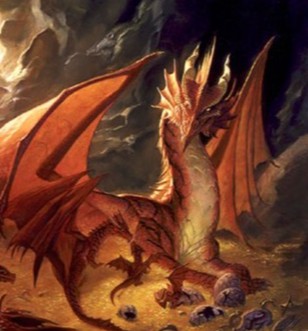
Dungeons & Dragons 3/3.5e
About this Game
Categories
Mechanics
How to Play Dungeons & Dragons 3/3.5e
When characters test their skills, the Dungeon Master might call for a "skill check" and set the difficulty at a certain number. That character will then roll a 20-sided die, add their bonus from the relevant stat and skill (plus or minus any circumstantial modifiers) and compare the result to the target number. If it's equal to or greater than that number, the character succeeds! Attacking works similarly to making skill checks, except it uses an attack bonus, instead of a skill, and the target number is set by the target's "armor class," or AC, how hard they are to hit.
Spellcasting is a bit more complex, as every spell has its own rules, but may include making attack roll, or requiring the target to make a reactive "saving throw" to avoid its worst effects. Saving throws are special stats derived from the basic stats and a character's class.
D&D 3.5 has plenty of specific rules to simulate a large number of possible situations, but these will cover most of the basics!
Classes
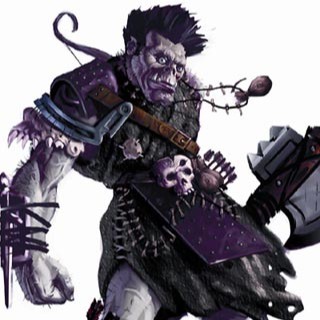
Barbarian
The barbarian is an excellent warrior. Where the fighter's skill in combat comes from training and discipline, however, the barbarian has a powerful rage. While in this berserk fury, they become stronger and tougher, better able to defeat their foes and withstand their attacks. These rages leave them winded, and they have the energy for only a few such spectacular displays per day, but those few rages are usually sufficient. They are at home in the wild, and runs at great speed.
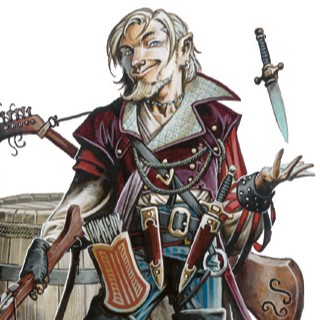
Bard
It is said that music has a special magic, and the bard proves that saying true. Wandering across the land, gathering lore, telling stories, working magic with their music, and living on the gratitude of their audience - such is the life of a bard. When chance or opportunity draws them into a conflict, bards serve as diplomats, negotiators, messengers, scouts, and spies.
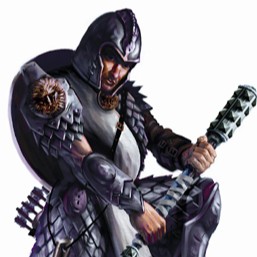
Cleric
The handiwork of the gods is everywhere - in places of natural beauty, in mighty crusades, in soaring temples, and in the hearts of worshipers. Like people, gods run the gamut from benevolent to malicious, reserved to intrusive, simple to inscrutable. The gods, however, work mostly through intermediaries - their clerics. Good clerics heal, protect, and avenge. Evil clerics pillage, destroy, and sabotage. A cleric uses the power of their god to make their god's will manifest. And if a cleric uses their god's power to improve their own lot, that's to be expected, too.
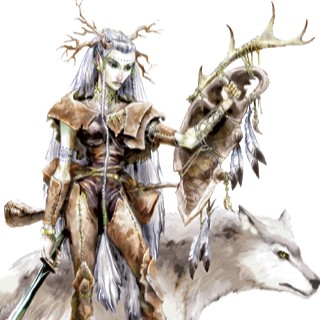
Druid
The fury of a storm, the gentle strength of the morning sun, the cunning of the fox, the power of the bear - all these and more are at the druid's command. The druid however, claims no mastery over nature. That claim, they say, is the empty boast of a city dweller. The druid gains their power not by ruling nature but by being at one with it. To trespassers in a druid's sacred grove, and to those who feel their wrath, the distinction is overly fine.
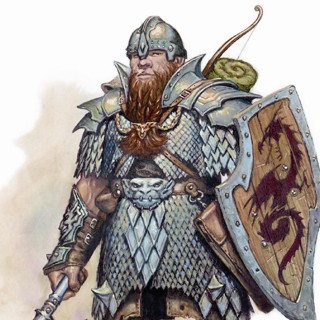
Fighter
The questing knight, the conquering overlord, the king's champion, the elite foot soldier, the hardened mercenary, and the bandit king - all are fighters. Fighters can be stalwart defenders of those in need, cruel marauders, or gutsy adventurers. Some are among the land's best souls, willing to face death for the greater good. Others are among the worst, with no qualms about killing for private gain, or even for sport. Fighters who are not actively adventuring may be soldiers, guards, bodyguards, champions, or criminal enforcers. An adventuring fighter might call themselves a warrior, a mercenary, a thug, or simply an adventurer.
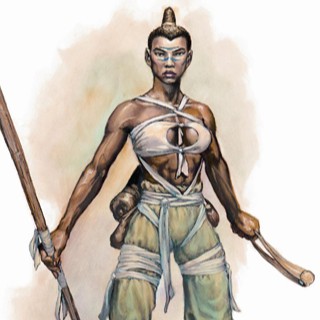
Monk
Dotted across the landscape are monasteries - small, walled cloisters inhabited by monks who pursue personal perfection through action as well as contemplation. They train themselves to be versatile warriors skilled at fighting without weapons or armor. The inhabitants of monasteries headed by good masters serve as protectors of the people. Ready for battle even when barefoot and dressed in peasant clothes, monks can travel unnoticed among the populace, catching bandits, warlords, and corrupt nobles unawares. In contrast, the residents of monasteries headed by evil masters rule the surrounding lands through fear, as an evil warlord and his entourage might. Evil monks make ideal spies, infiltrators, and assassins.
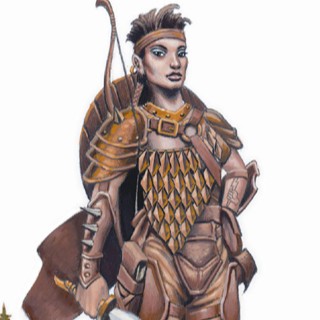
Paladin
The compassion to pursue good, the will to uphold law, and the power to defeat evil - these are the three weapons of the paladin. Few have the purity and devotion that it takes to walk the paladin's path, but those few are rewarded with the power to protect, to heal, and to smite. In a land of scheming wizards, unholy priests, bloodthirsty dragons, and infernal fiends, the paladin is the final hope that cannot be extinguished.
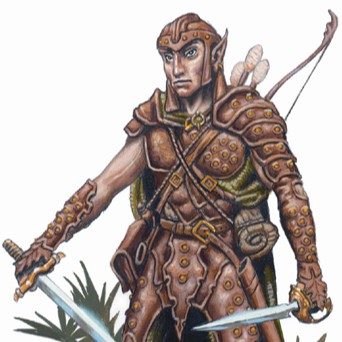
Ranger
The forests are home to fierce and cunning creatures, such as bloodthirsty owlbears and malicious displacer beasts. But more cunning and powerful than these monsters is the ranger, a skilled hunter and stalker. They know the woods as if they were their home (as indeed they are), and they know their prey in deadly detail.
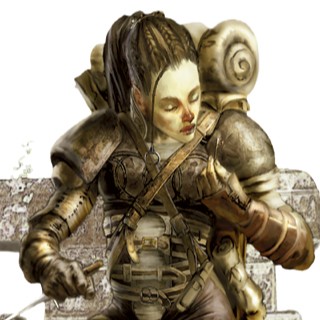
Rogue
Rogues share little in common with each other. Some are stealthy thieves. Others are silver-tongued tricksters. Still others are scouts, infiltrators, spies, diplomats, or thugs. What they share is versatility, adaptability, and resourcefulness. In general, rogues are skilled at getting what others don't want them to get: entrance into a locked treasure vault, safe passage past a deadly trap, secret battle plans, a guard's trust, or some random person's pocket money.
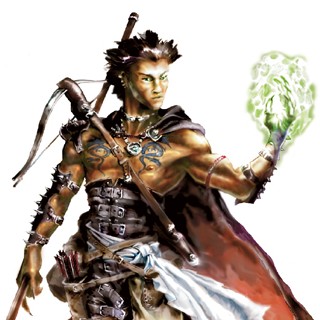
Sorcerer
Sorcerers create magic the way a poet creates poems, with inborn talent honed by practice. They have no books, no mentors, no theories - just raw power that they direct at will. Some sorcerers claim that the blood of dragons courses through their veins. That claim may even be true in some cases - it is common knowledge that certain powerful dragons can take humanoid form and even have humanoid lovers, and it's difficult to prove that a given sorcerer does not have a dragon ancestor. It's true that sorcerers often have striking good looks, usually with a touch of the exotic that hints at an unusual heritage. Others hold that the claim is either an unsubstantiated boast on the part of certain sorcerers or envious gossip on the part of those who lack the sorcerer's gift.
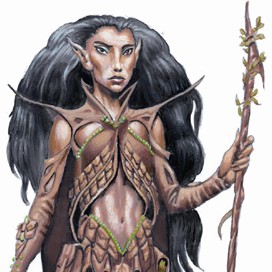
Wizard
A few unintelligible words and fleeting gestures carry more power than a battleaxe, when they are the words and gestures of a wizard. These simple acts make magic seem easy, but they only hint at the time the wizard must spend poring over their spellbook preparing each spell for casting, and the years before that spent in apprenticeship to learn the arts of magic. Wizards depend on intensive study to create their magic. They examine musty old tomes, debate magical theory with their peers, and practice minor magics whenever they can. For a wizard, magic is not a talent but a difficult, rewarding art.
Frequently Asked Questions
What do you need to play D&D?
What dice do you need for D&D?
Who created D&D?
When did D&D come out?
What's the difference between D&D 3rd edition and 3.5?
Get This Game
Active Sessions & Campaigns
No game systems available yet.
Find sessions